 TheBodyBlueprint
Nutrient Partitioning
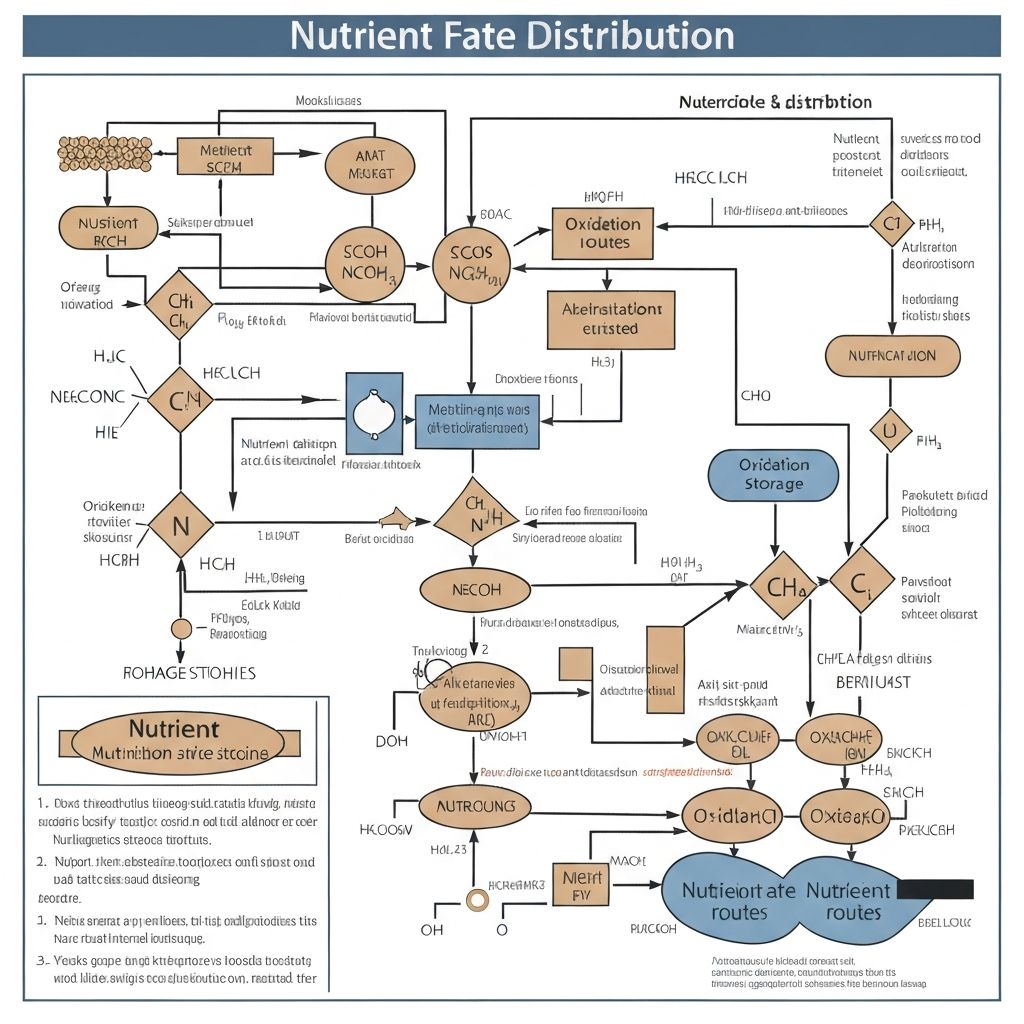
Overview of how dietary nutrients are distributed across oxidation, storage, and synthesis pathways in metabolic research.
Nutrient partitioning describes the metabolic fate of ingested nutrients. Once consumed, macronutrients follow specific pathways depending on metabolic state, energy balance, and tissue requirements. Understanding these pathways provides context for how body composition is regulated.
Carbohydrate Partitioning
Dietary carbohydrates are broken down into glucose, which enters various metabolic pathways. Glucose can be oxidized immediately for energy, stored as glycogen in liver and muscle tissue, or converted to fatty acids for storage in adipose tissue. The proportion distributed to each pathway depends on metabolic state, physical activity, and current glycogen levels.
Protein Partitioning
Dietary protein is digested into amino acids, which can be oxidized for energy, incorporated into new protein synthesis, or converted to glucose or fatty acids through gluconeogenesis and lipogenesis. Protein partitioning is influenced by amino acid availability, energy balance state, and tissue protein turnover rates.
Fat Partitioning
Dietary fat is absorbed and either oxidized for immediate energy or stored as triglycerides in adipose tissue. Fat has relatively low thermic effect, meaning most dietary fat energy is available for storage or oxidation without substantial energy cost for digestion. Fat oxidation increases when other energy sources are limited.
Metabolic State Influences
Whether the body is in a fed or fasted state substantially influences nutrient partitioning. In the fed state (when insulin is elevated), nutrient storage is favored. In the fasted state, nutrient mobilization from storage tissues is increased. Energy balance state (caloric surplus or deficit) also influences partitioning patterns.
Hormonal Signaling
Hormonal signals coordinate nutrient partitioning. Insulin promotes storage of carbohydrates and fat while suppressing their oxidation. Glucagon and other catabolic hormones promote mobilization of stored nutrients. These hormonal signals interact with metabolic demands to direct nutrients along appropriate metabolic pathways.
Educational Context
This article explains nutrient partitioning mechanisms from research. It is informational and does not provide guidance on macronutrient composition, dietary ratios, or nutritional strategies. Individual responses to different macronutrient compositions vary substantially. For dietary guidance, consult a qualified healthcare professional.